A shedding surface again
Water runs off a coated covering instead of soaking into it, which is the whole point on an island roof.
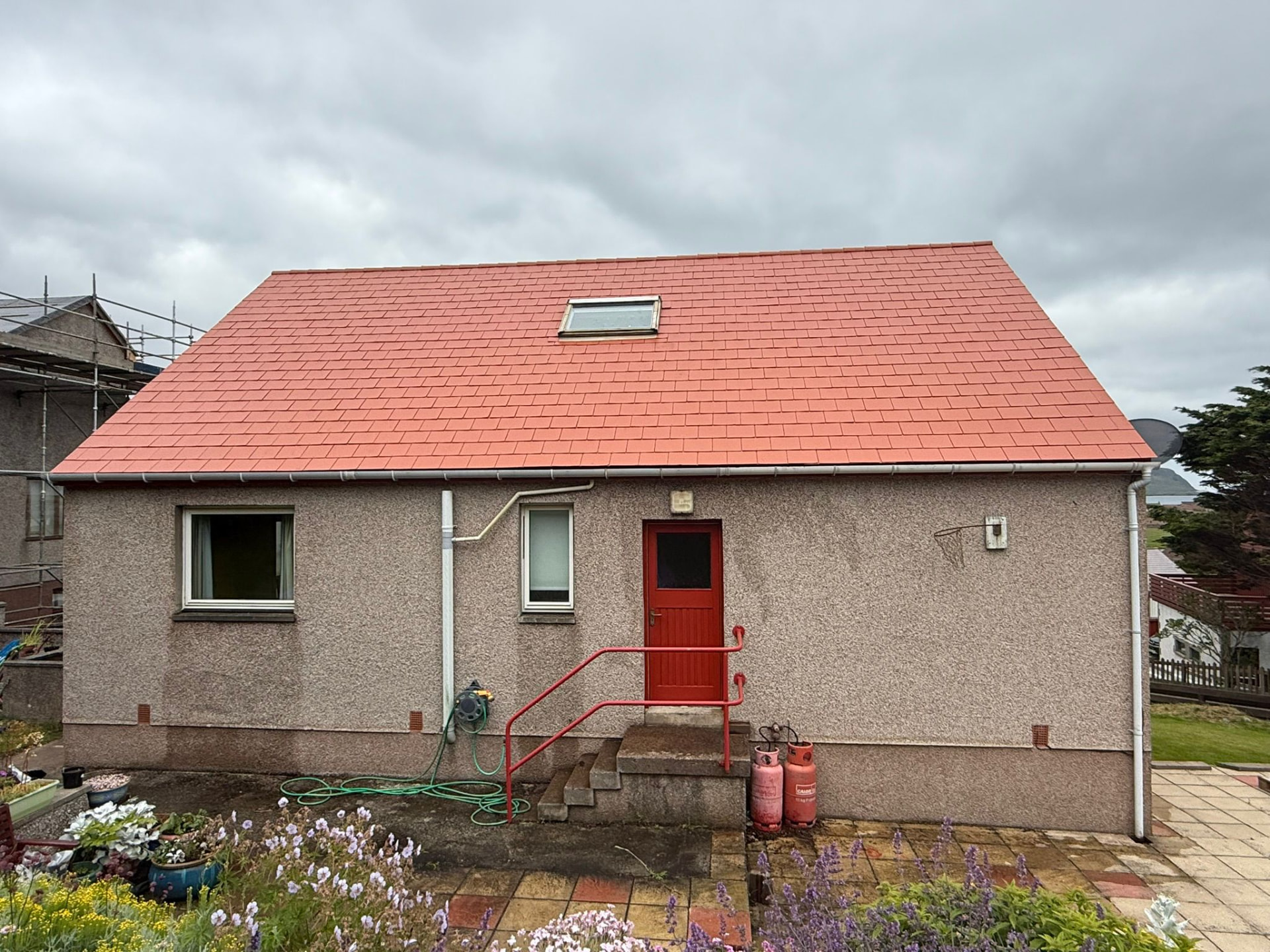
Keep a roof that is structurally fine looking and performing better for longer: a protective coating applied over a properly cleaned surface, not paint sprayed over moss to hide a problem.
17 years' property experience · Lerwick-based team · Free, no-obligation estimate
17 years' experience
In Shetland property
Shetland & Orkney
Lerwick-based team
Mon–Fri, 9am–5pm
Local office hours
Rated on Google
Read our reviews
Overview
Roof coating is the application of a protective, weather-resistant product to a cleaned roof covering. It restores a consistent colour and finish, and puts a shedding surface over material that has become porous, faded or open-textured with age.
It is the second half of a two-part job. The roof is cleaned first, growth removed, surface prepared, defects made good, and only then is the coating applied. Skipping the preparation is the single reason most coating work fails early.
Coating is an option for a roof that is sound. It is a protective and cosmetic improvement, not a repair for a roof that has reached the end of its life, and we will tell you plainly which of those we are looking at.
Coating is only as good as the preparation underneath it. A coating over dirt, dead moss or damp lichen will peel, and the second attempt costs more than doing it right first time.
Application needs the right weather window, the right product for the covering and even, controlled coverage across the whole roof. On an exposed island site that window has to be chosen, not hoped for.
We assess whether coating is the right answer at all. If the roof needs repair or replacement instead, you will hear that rather than being sold a coating that buys twelve months.
What It Costs To Ignore
A porous roof covering absorbs water instead of shedding it. That extra weight, plus repeated saturation and drying, accelerates the breakdown of the material and gives moss an easier surface to take hold on. Every season it happens faster than the last.
The trap with coating is the cheap version of it. A coating rolled or sprayed over a surface that was never properly cleaned looks impressive for a season, then flakes off in sheets, taking any credibility with it, and the roof underneath is no better off. Owners are then paying twice: once for the failed coating, once to have it removed before the job can be done properly.
The other risk is coating the wrong roof. If the covering is at the end of its service life, a coating does not extend it; it just makes the failure harder to see until water is already inside.
Our Process
We assess whether the roof is a sound candidate for coating. If it is not, we say so, and explain what the roof actually needs instead.
You get a firm price covering both the cleaning and the coating stages, so there is no surprise second invoice halfway through.
Growth is removed, the surface is cleaned down and any loose material is taken off. This stage decides whether the coating lasts.
Slipped slates, failed pointing and flashing defects are dealt with before any product goes on. Coating a defect does not fix it.
The product is applied evenly across the covering in a suitable weather window, with the surrounding building, paths and planting protected throughout.
We check coverage across the whole roof, clear the gutter line, tidy the site and walk the finished job with you.
Benefits
Water runs off a coated covering instead of soaking into it, which is the whole point on an island roof.
Moss and lichen find a smooth, treated surface far harder to colonise than an open, weathered one.
Where the covering is sound, coating protects the investment you already have rather than forcing an early replacement.
Patchy, faded and repaired areas read as one roof again: a real difference when a property is being sold or let.
Repairs happen before coating as part of the same job, so nothing gets sealed over and forgotten.
If coating is not right for your roof we will tell you before you have spent anything.
In Detail
A roof with widespread cracked or delaminating slates, failed fixings, sagging structure or active water ingress is not a coating job. Coating it hides the evidence without changing the outcome, and the eventual repair is larger because the problem ran on unseen.
Natural slate in good order rarely needs coating at all; it is a durable, naturally shedding material, and cleaning plus sound pointing and flashings is usually the correct specification.
Every coating we apply goes onto a surface that has been cleaned, dried within a suitable window and made good. Growth is removed rather than simply killed and left, because dead lichen is still a barrier between the product and the covering.
Loose, friable material is taken back to a stable surface. Ridge and verge pointing is checked. Flashings and abutments are inspected, because a coating cannot bridge a failed detail and will not be asked to.
Application needs a dry surface, workable temperatures and a period afterwards for the product to cure. Shetland and Orkney do not hand those out freely, so coating work is scheduled against the forecast and we would rather move a date than apply a product into driving rain.
Exposure also affects product choice and how many coats a roof needs. A sheltered town roof in Lerwick and a fully exposed rural roof facing the Atlantic are not the same specification.
On houses the main drivers are appearance, protection and getting more years out of a sound roof. Access and tidiness around the household matter, and we plan the job accordingly.
On commercial buildings and larger outbuildings the roof area and the sheet or profile type usually dominate the specification, and work is scheduled around occupation and access. Where a portfolio owner wants several properties brought to a consistent standard, we plan the sequence rather than treating each one as a separate emergency.
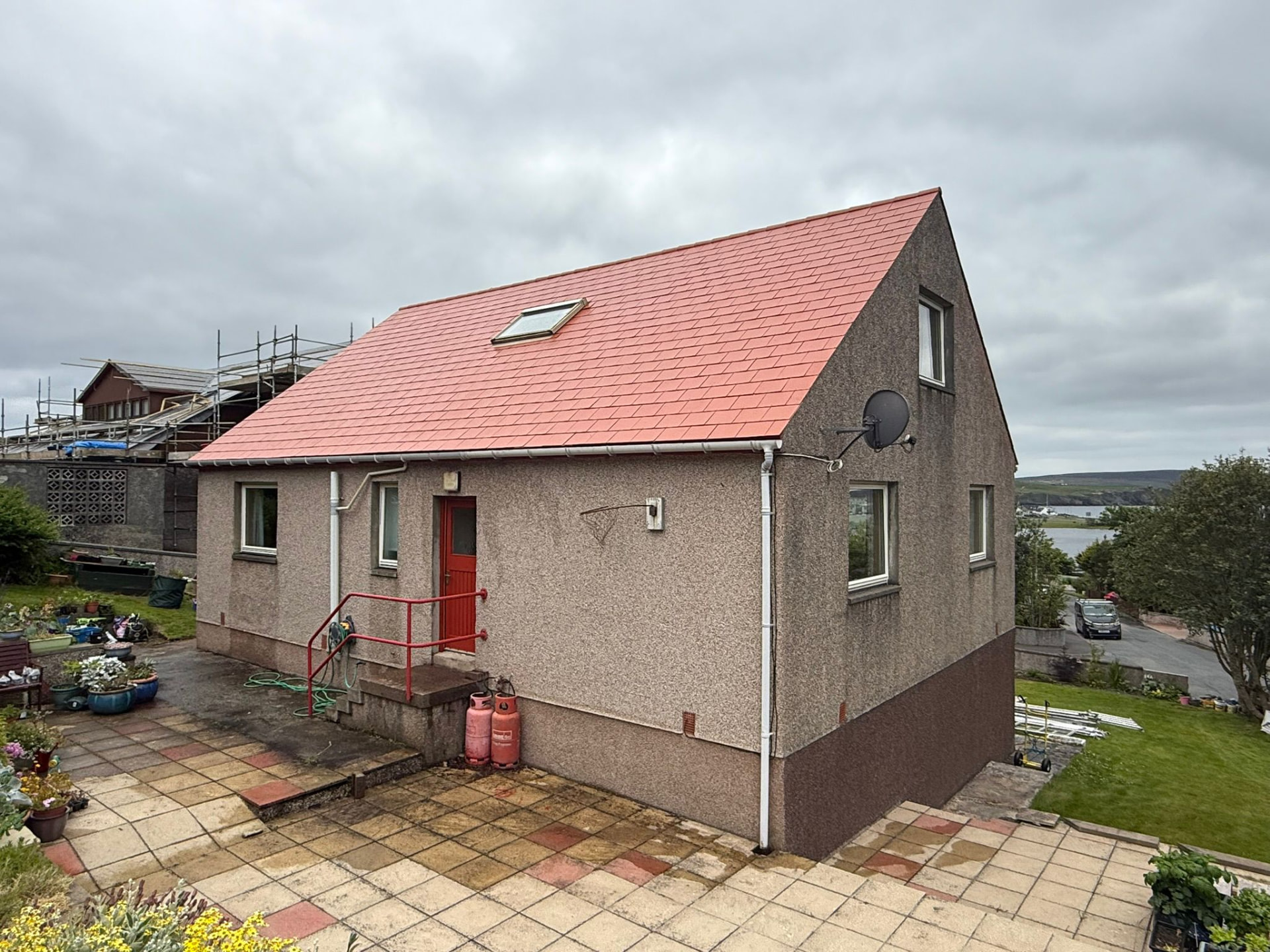 BeforeAfter
Before & After
Drag the handle to compare. Both photographs are from one of our own roof coating jobs in Shetland.
Our Work
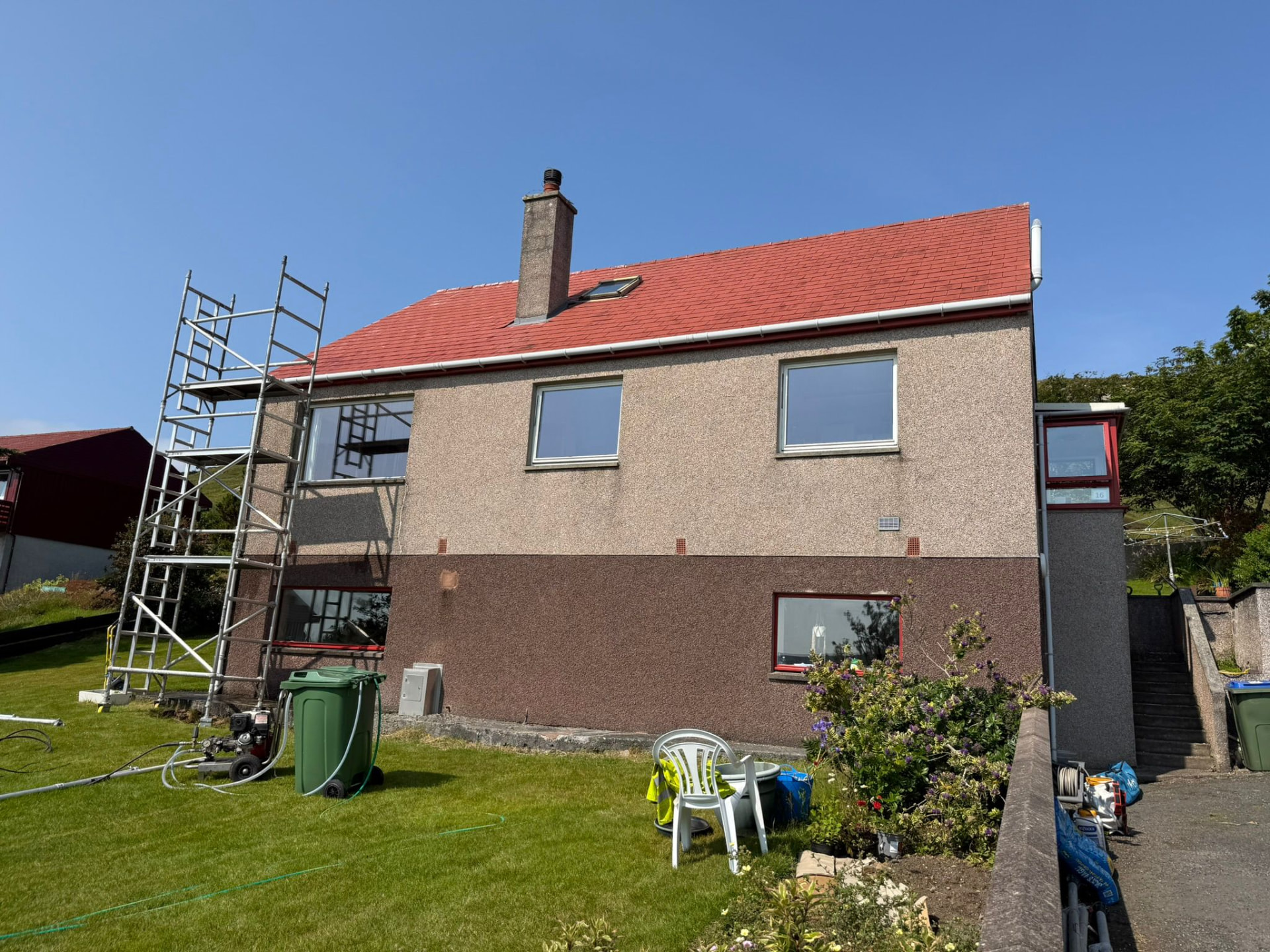
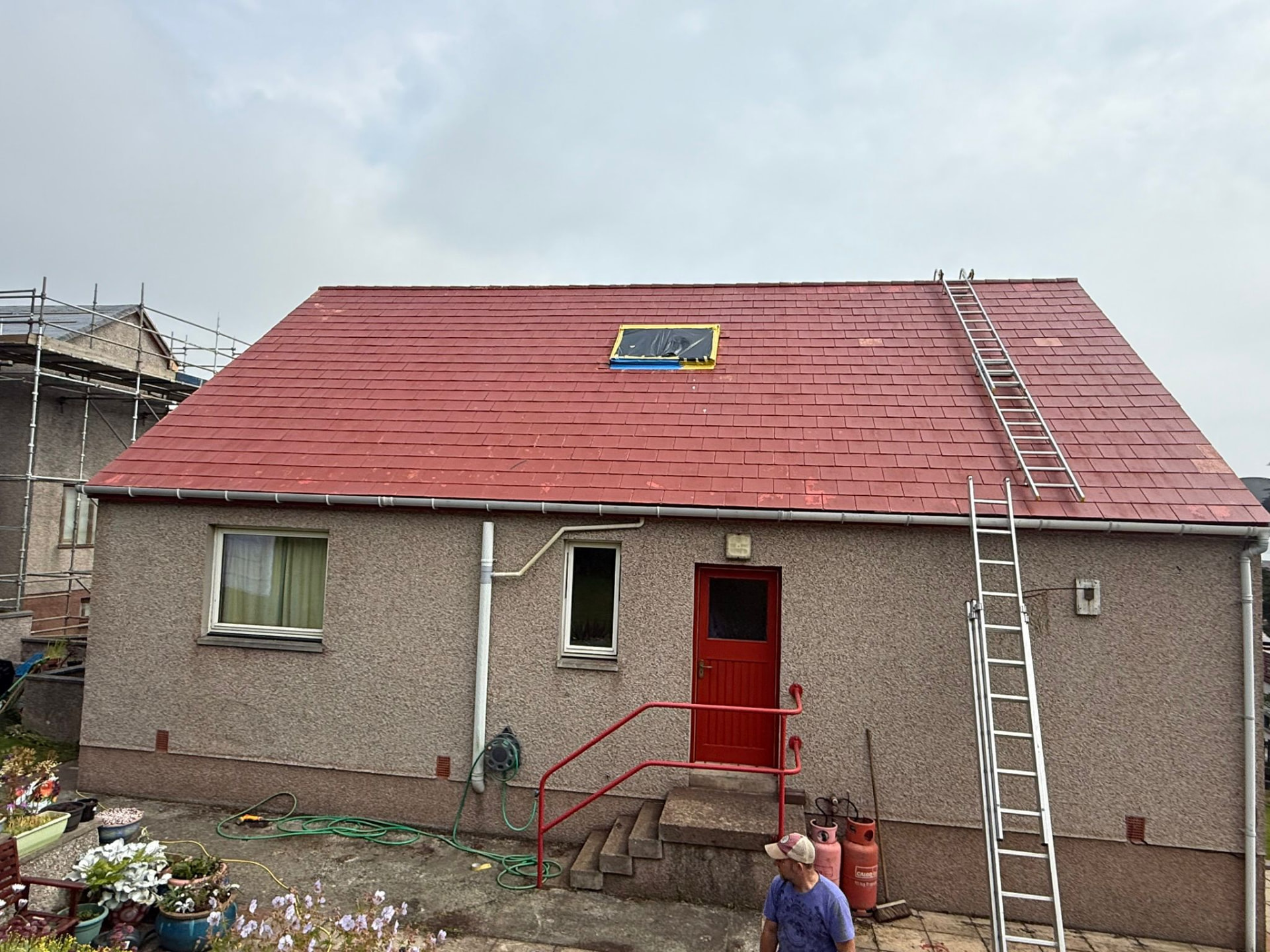
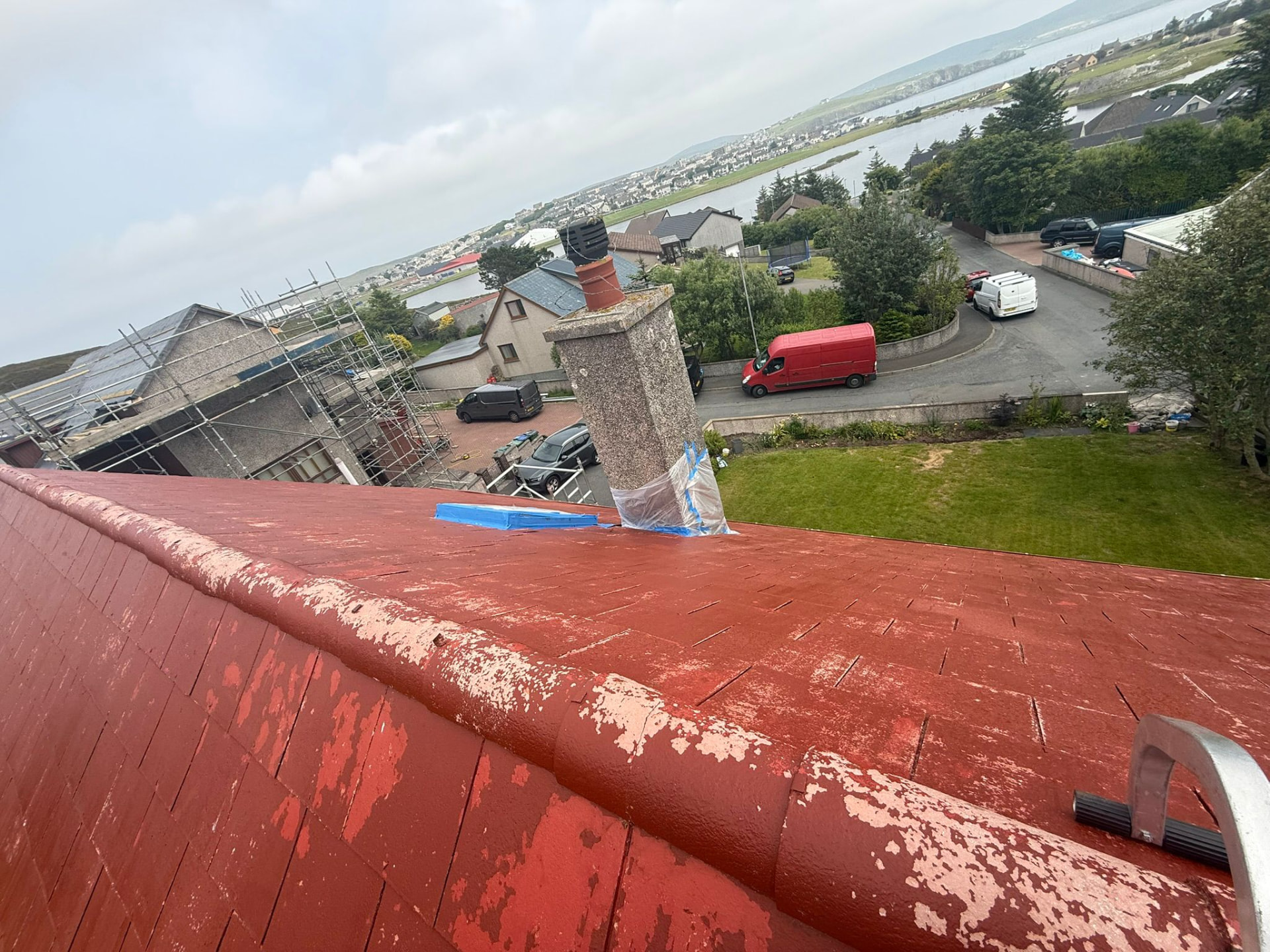
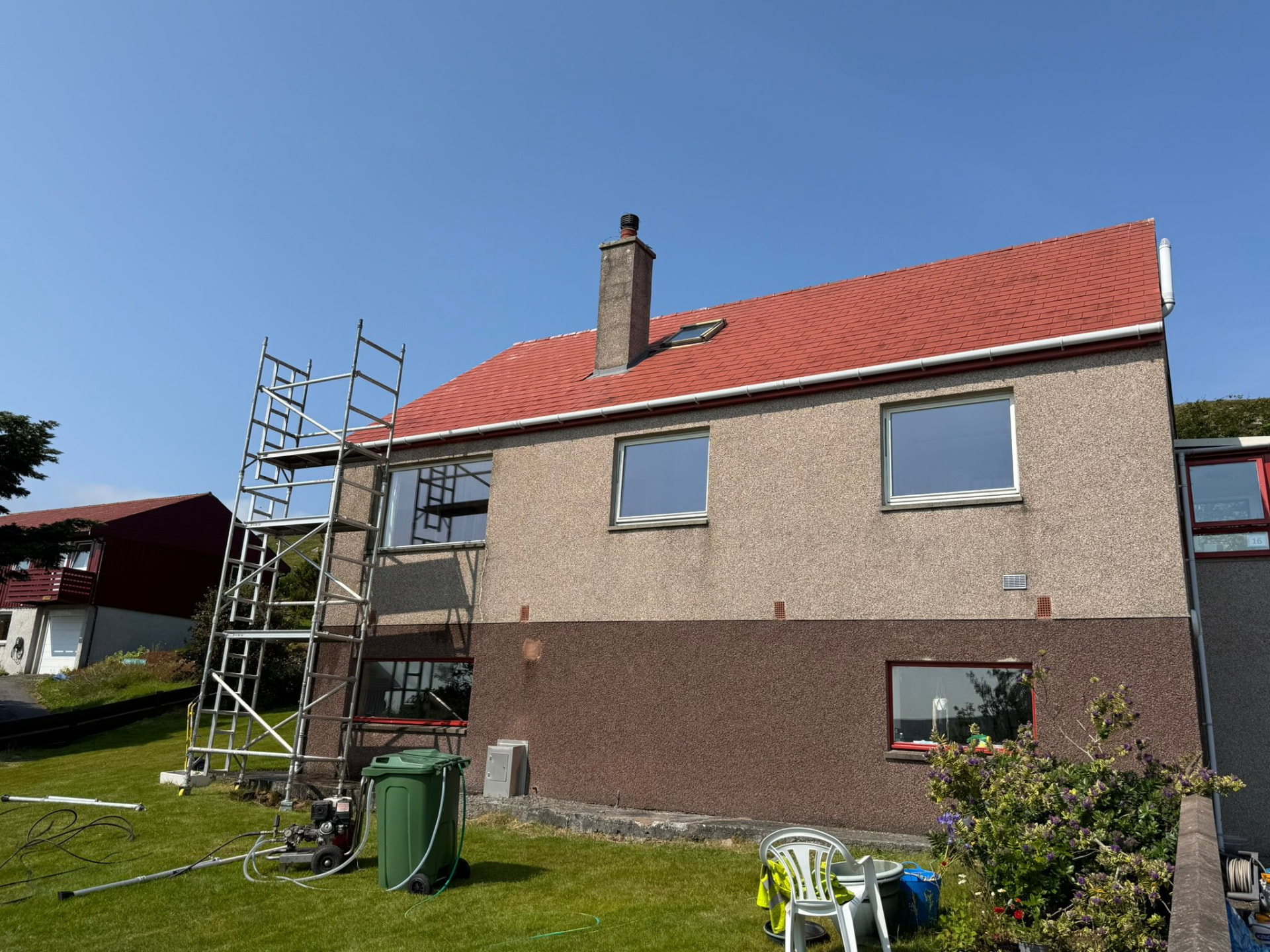
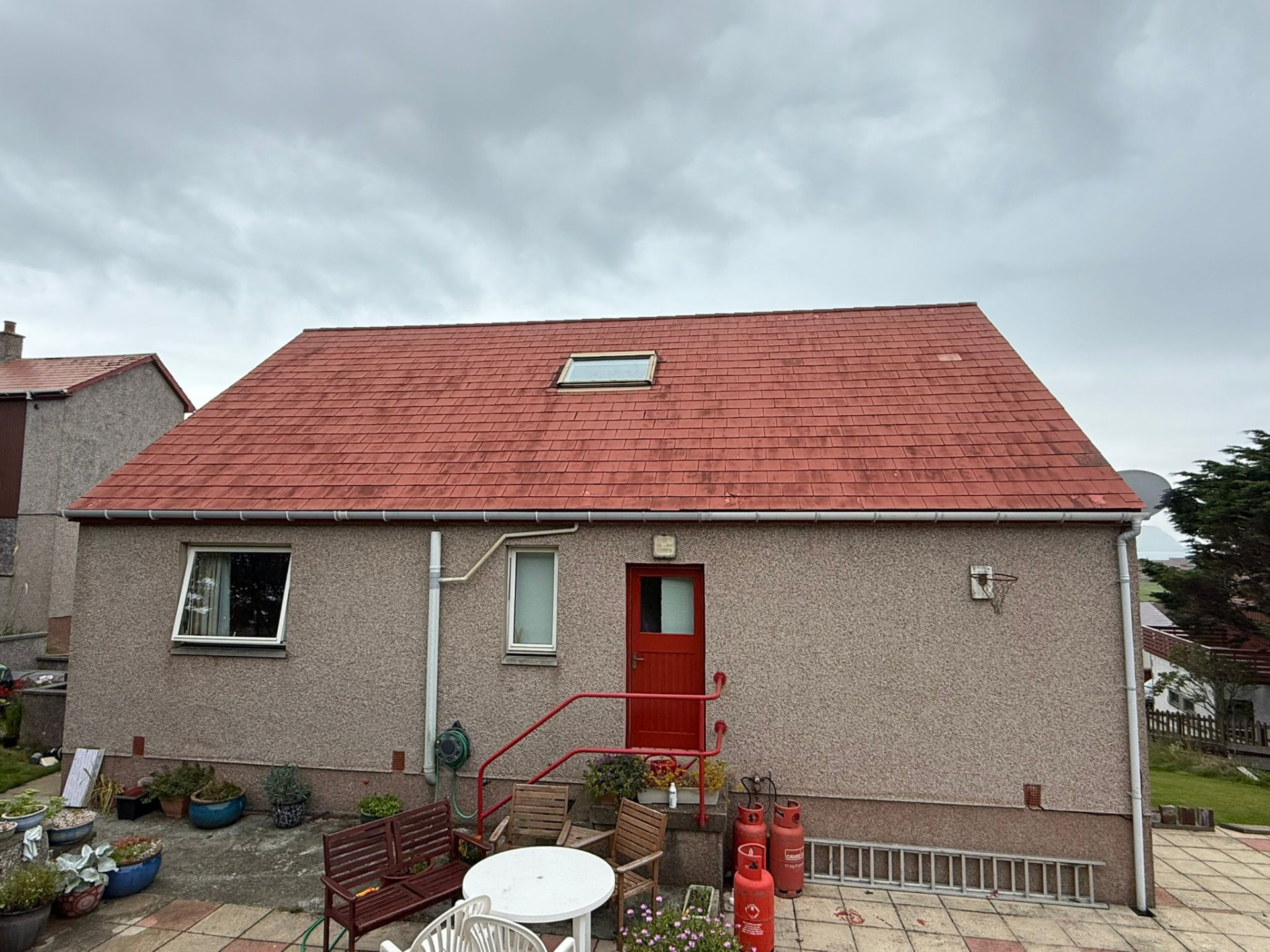
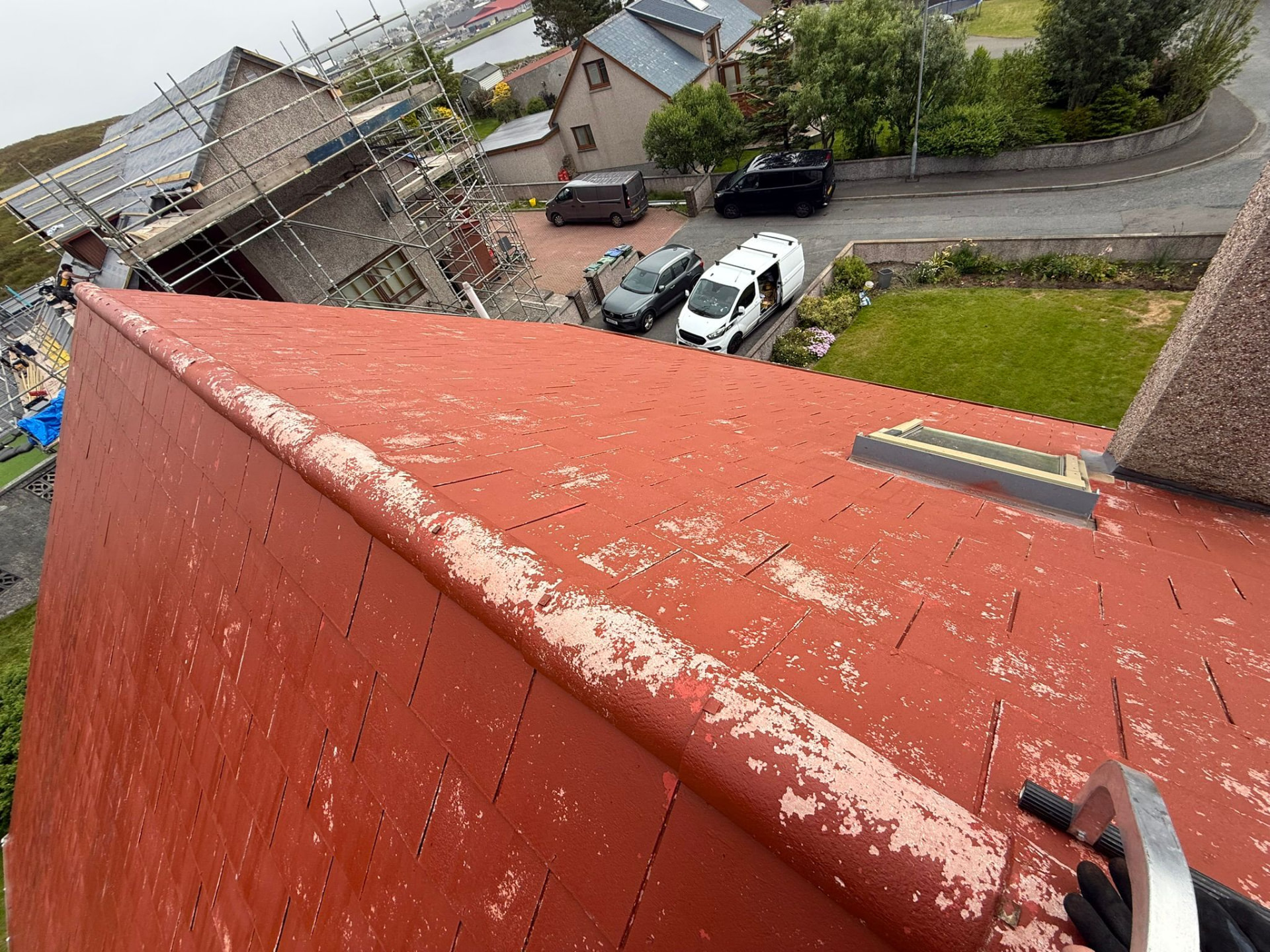
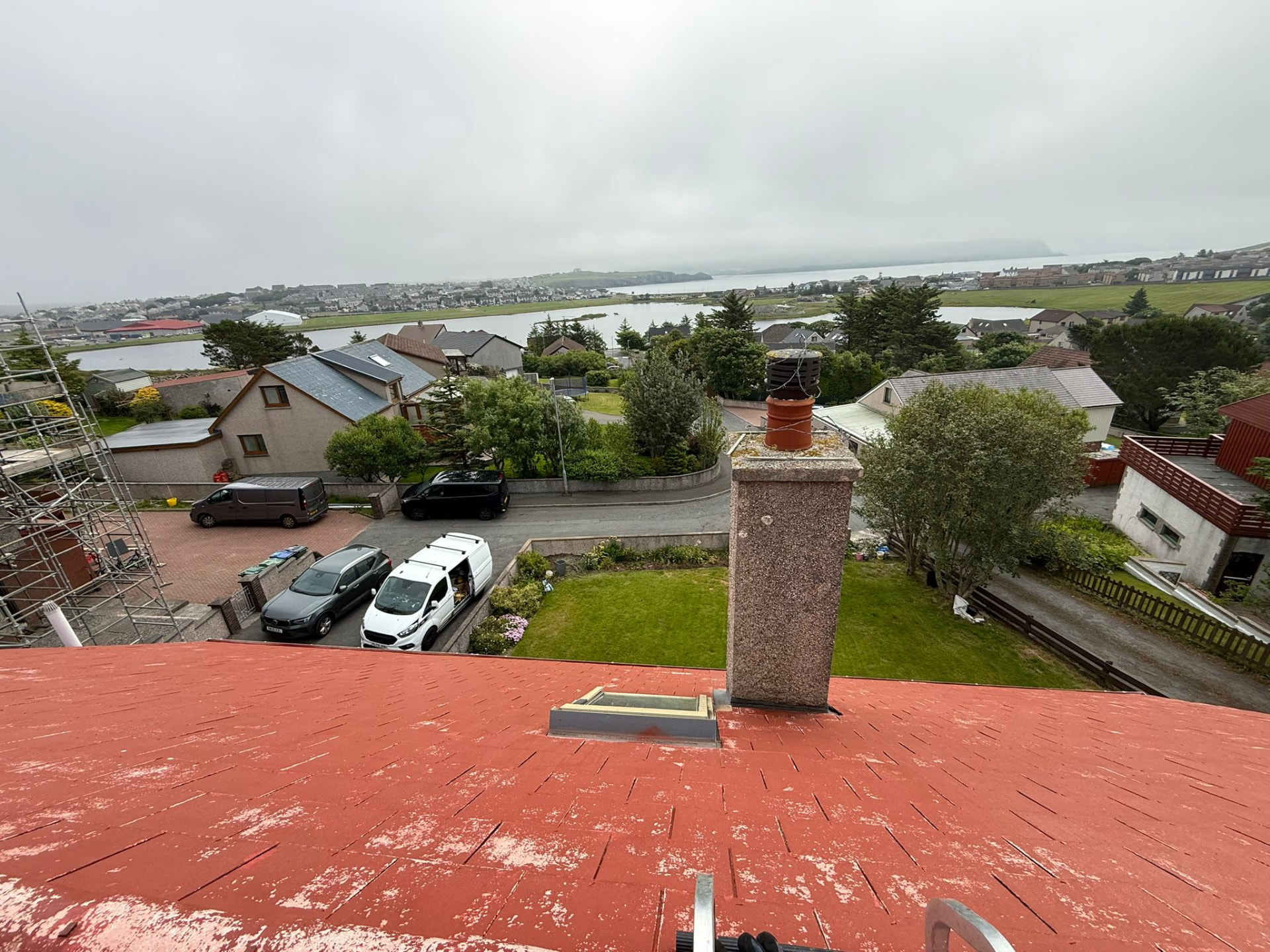
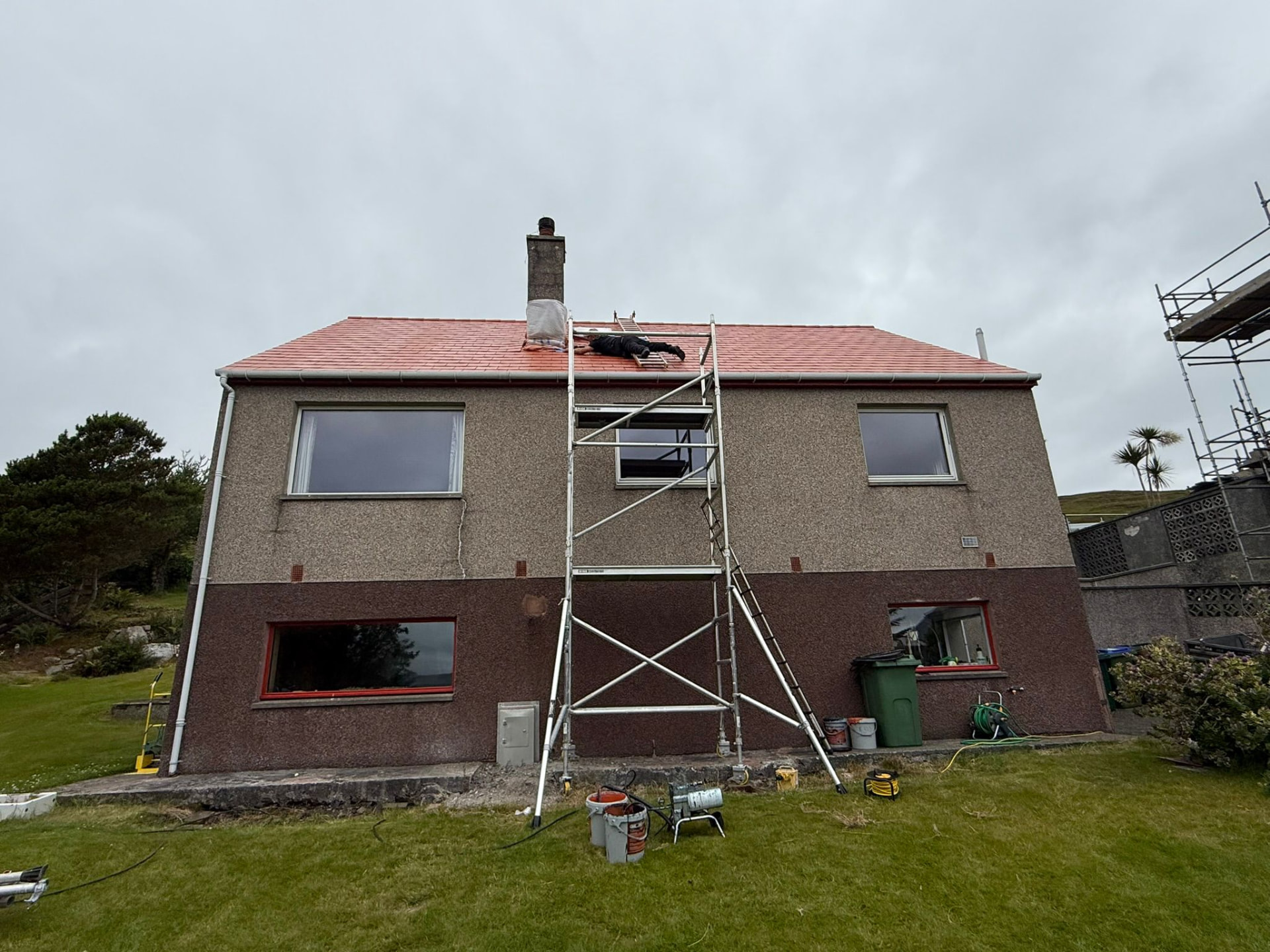
Photographs from our own jobs on Shetland properties, no stock images.
Where We Work
We are based on Commercial Street in Lerwick and travel across both island groups for cleaning and maintenance work.
More detail on the areas we cover is on the homepage areas section.
Questions
It depends on the roof area, the covering, the condition of the surface and the access. We price cleaning, any repairs and the coating together so you see the full cost up front. The estimate is free and carries no obligation.
That depends on the product, the covering and how exposed the property is: an exposed island roof works harder than a sheltered one. We will give you a realistic expectation for your roof rather than a headline figure.
Yes, always. A coating applied over moss, lichen or loose material will not bond and will fail early. Cleaning and preparation are part of every coating job we quote.
No. A leak means a defect, a slipped slate, a failed flashing, an open detail, and that needs repairing. Coating a leaking roof hides the symptom for a while and makes the eventual repair bigger.
Cleaning and coating together is typically a multi-day job, and the schedule depends on the weather window as much as on the roof. We give you the expected duration when we price it.
Usually there is no need. Sound natural slate sheds water well on its own, and cleaning plus attention to pointing and flashings is normally the better specification. We will tell you if that is the case at your property.
Yes. We work across both island groups from our Lerwick base, including Kirkwall, Stromness and St Margaret's Hope.
We tell you at the inspection stage, before you have committed to anything, and explain what the roof does need, which may be cleaning alone, targeted repair, or roofing work.
It restores an even, consistent finish, and colour options depend on the product and covering. We go through this with you before the work is booked so there are no surprises.
Related Work
Free Estimate
We will inspect the covering, tell you honestly whether coating will help, and price the clean and the coating together. Free estimate, no obligation, no pressure.
property@arthurandsimpson.com
68 Commercial Street, Lerwick, Shetland ZE2 9EZ
Mon–Fri, 9am–5pm · Closed Sat & Sun
17 years' property experience · Lerwick-based team · Free, no-obligation estimates