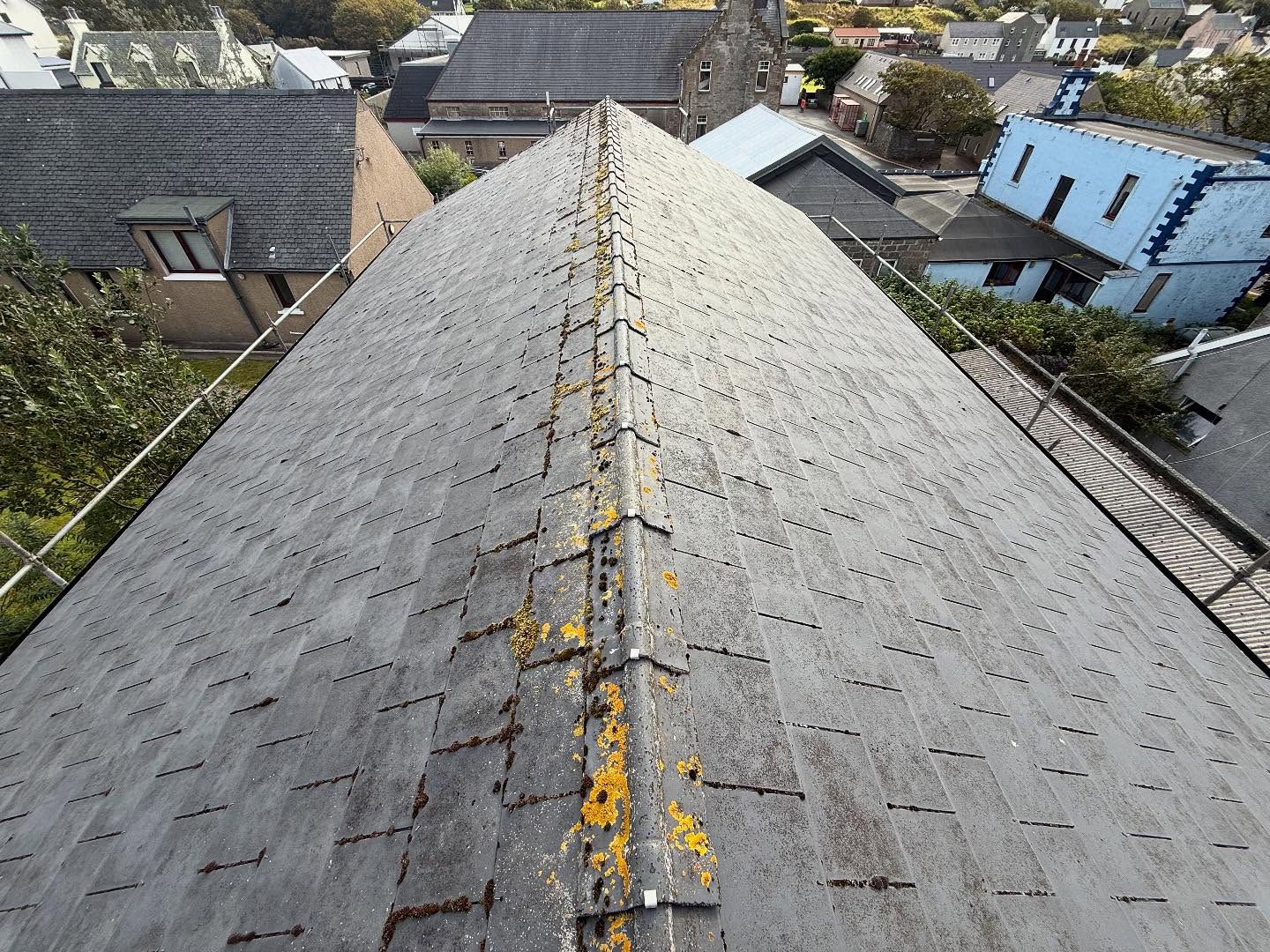
The roof drains as designed
Clear slates, clear valleys and clear gutters mean rain leaves the building instead of sitting on it.
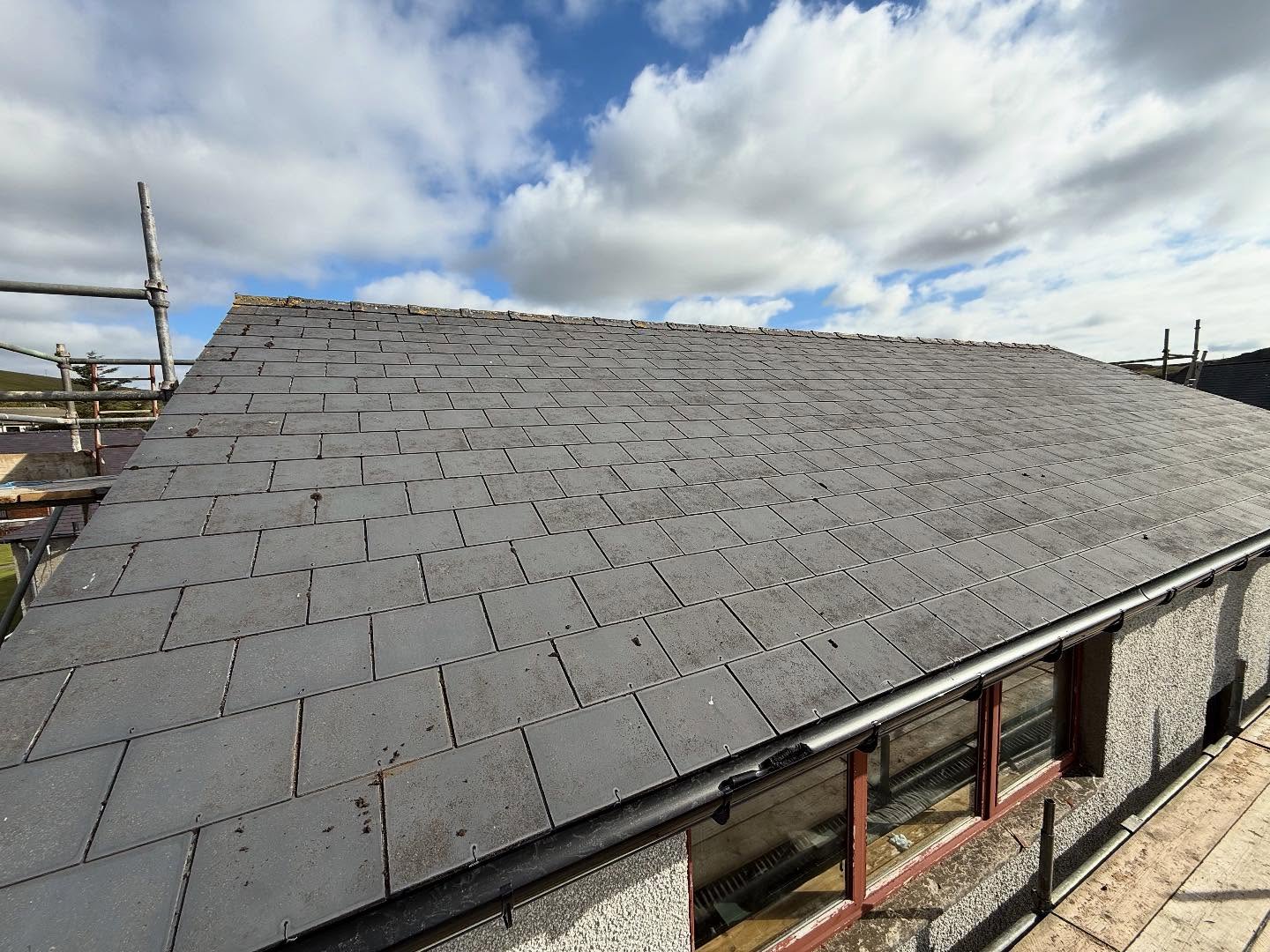
Get a clean, free-draining roof that sheds island rain the way it was built to, without a jet wash stripping the surface off your slates or forcing water under them.
17 years' property experience · Lerwick-based team · Free, no-obligation estimate
17 years' experience
In Shetland property
Shetland & Orkney
Lerwick-based team
Mon–Fri, 9am–5pm
Local office hours
Rated on Google
Read our reviews
Overview
Roof cleaning is the controlled removal of moss, lichen, algae and organic debris from the covering of your roof, slate, concrete tile, clay tile or profiled sheet, along with the valleys, verges and gutter line where that material collects.
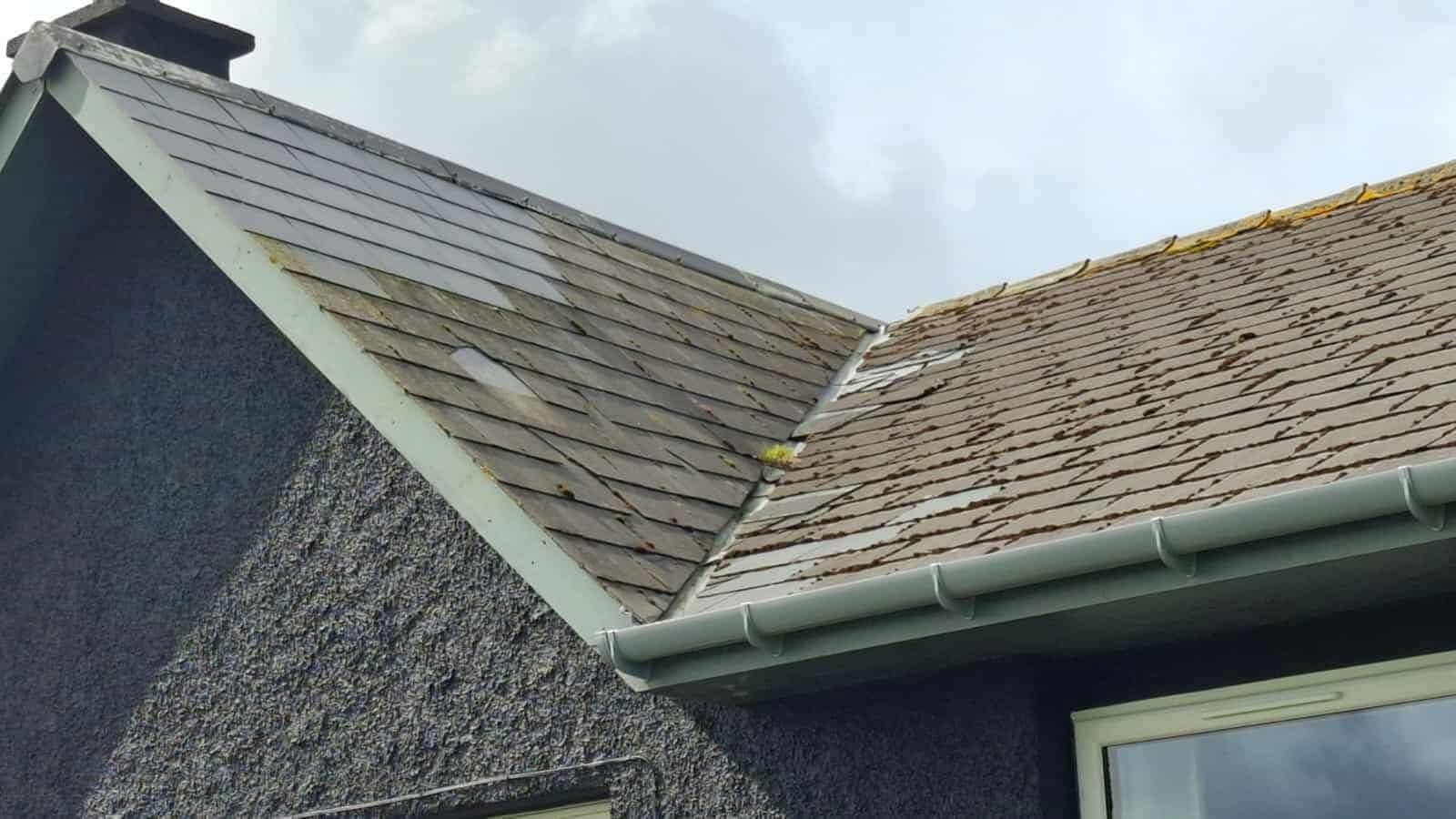
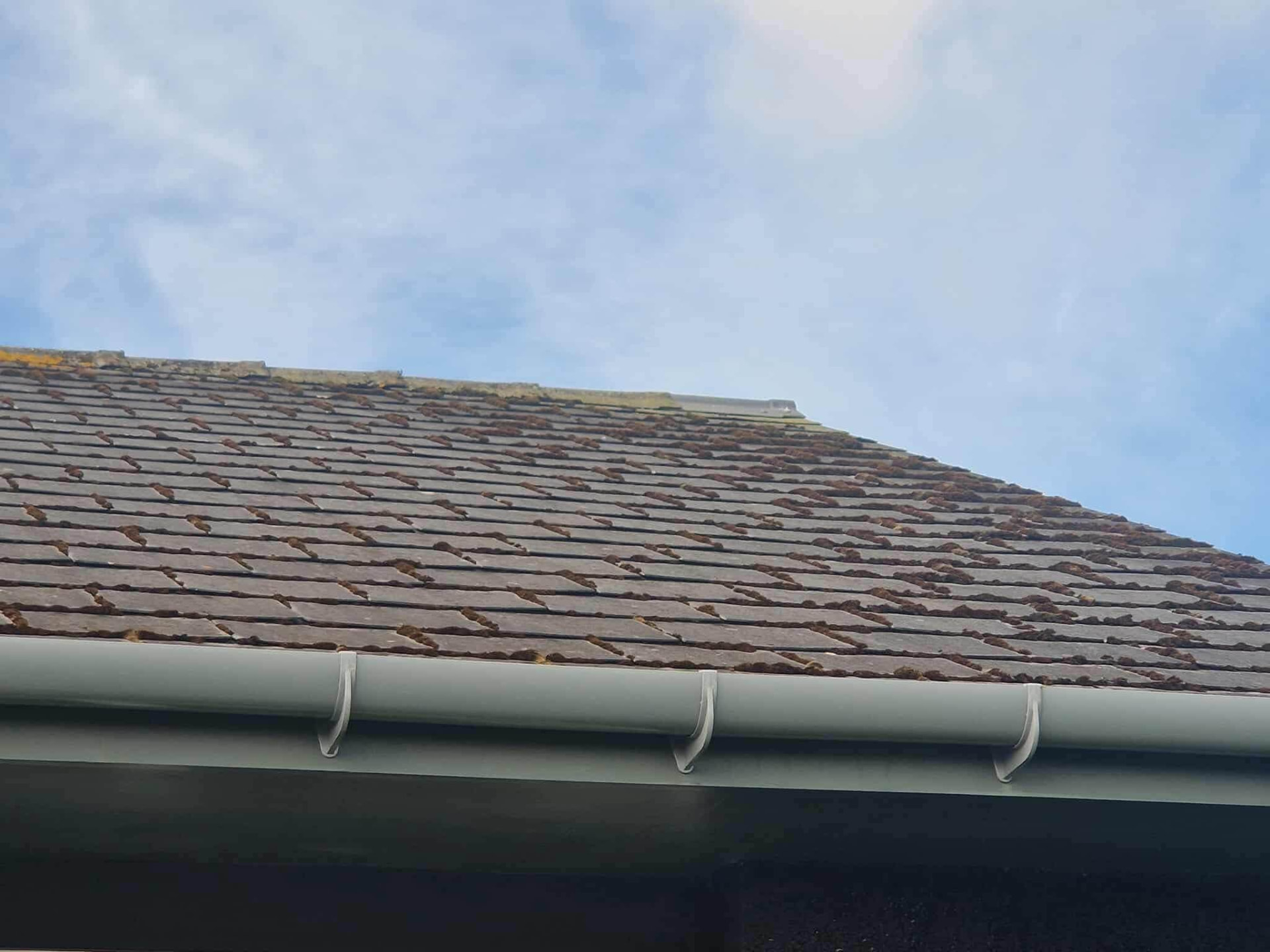
On a Shetland roof the growth is rarely cosmetic only. Moss holds water directly against the covering, lifts slate tails, blocks the gaps that let a roof drain and breathe, and washes down into gutters and hoppers where it sits until something overflows. Cleaning the roof deals with the cause rather than the symptom further down the building.
We work to the covering in front of us. Natural slate, fibre cement and concrete tile all behave differently, and the method we use is chosen for the roof rather than for speed: scraping and brushing where that is right, low-pressure softwashing and biocide treatment where a mechanical approach would do harm.
Roof work is height work. Access has to be set up properly, and on an exposed island site the weather window matters as much as the method.
A high-pressure wash aimed at a slate roof is the fastest way to strip the surface, loosen nibs and drive water under the covering. Undoing that costs far more than cleaning it correctly in the first place.
We come at this from managing property, not from a van that appeared last season. If the clean uncovers slipped slates, failed pointing or a tired flashing, we tell you about it and can carry out the repair with the same team.
What It Costs To Ignore
Left alone, moss does not stay still. The root system works into the joints and under the tails of slates, and each growth season it holds more water against a surface that was designed to shed it. In freeze-thaw weather that trapped water expands, and the damage moves from the growth itself to the covering underneath.
The second problem is drainage. Everything that falls off the roof ends up in the gutter. A roof carrying heavy growth will block gutters faster than you can clear them, and blocked gutters push water down the wall face, into the wallhead, and eventually into the fabric of the building. The repair bill for saturated masonry or a rotten wallplate is in a different category to the cost of cleaning a roof.
There is also the simple matter of what the property looks like. A blackened, mossy roof reads as a neglected building to a buyer, a surveyor or a prospective tenant, often before anyone has looked at anything else.
Our Process
We look at the covering, the pitch, the state of the valleys, flashings and ridge, and how the roof drains. You get an honest picture of what the roof needs, which is sometimes less than you expected, and occasionally more.
We tell you the method we would use and why, and give you a price for the work. No vague estimates and no pressure to decide on the doorstep.
Access is set up for the property and the weather. Ground-level areas, planting, paths and drainage are protected before anything comes off the roof.
Growth is removed using the method suited to the covering, careful mechanical removal, low-pressure softwashing, or biocide treatment where killing the growth at the root is the right call.
Gutters, hoppers and outlets are cleared of everything the clean has brought down, so the roof and the drainage are dealt with as one job rather than two.
We tidy up, walk the job with you, and flag anything we found, slipped slates, failed pointing, a flashing on its way out, so you can decide what to do next.
Benefits
Clear slates, clear valleys and clear gutters mean rain leaves the building instead of sitting on it.
Removing growth before it lifts slates is far cheaper than replacing sections of roof that failed early.
Method chosen for the covering, not for speed. Softwashing and controlled removal instead of a jet wash at full pressure.
Most repeat gutter blockages on island properties start on the roof. Deal with the source and the clearing interval stretches out.
A clean puts trained eyes over every part of the roof. Small defects get reported while they are still small.
For sale, for letting, or simply for your own satisfaction, a clean roof changes how the whole building reads.
In Detail
Mechanical removal, brushing and scraping growth off by hand, is used where the covering is sound and the moss is thick enough that chemical treatment alone would leave a mat of dead material behind. It gives an immediate visible result.
Softwashing applies cleaning solution at low pressure, letting the product do the work instead of the water. It is the right method for fragile, painted, coated or surface-sensitive roofs and for any situation where forcing water uphill under a lap would be a risk.
Biocide treatment kills lichen and algae at the root so regrowth is slowed. It works over weeks rather than in an afternoon, and is often combined with removal for the best of both.
High-pressure washing has a narrow, specific place in roof work and is not our default. If someone offers to jet wash your slate roof, that is worth a second thought.
Shetland and Orkney give moss everything it wants: persistent damp, mild winters by UK standards, clean air and long periods of low light on north-facing slopes. Add salt-laden wind carrying spores and grit inland, and a roof here will carry growth that an inland mainland property of the same age would not.
It also means the cleaning interval is shorter here. A roof cleaned properly and treated will stay clear for years, not decades, and planning for that is more useful than pretending otherwise.
On houses the priorities are usually appearance, gutter performance and protecting the covering. Work is planned around the household, access is kept tidy, and the site is left clear at the end of each day.
On commercial and let property the priorities shift to access management, minimal disruption to occupants or trading, and a clear record of what was done. As a business that grew out of property management, scheduling around tenants and reporting back to an owner is routine for us rather than an inconvenience.
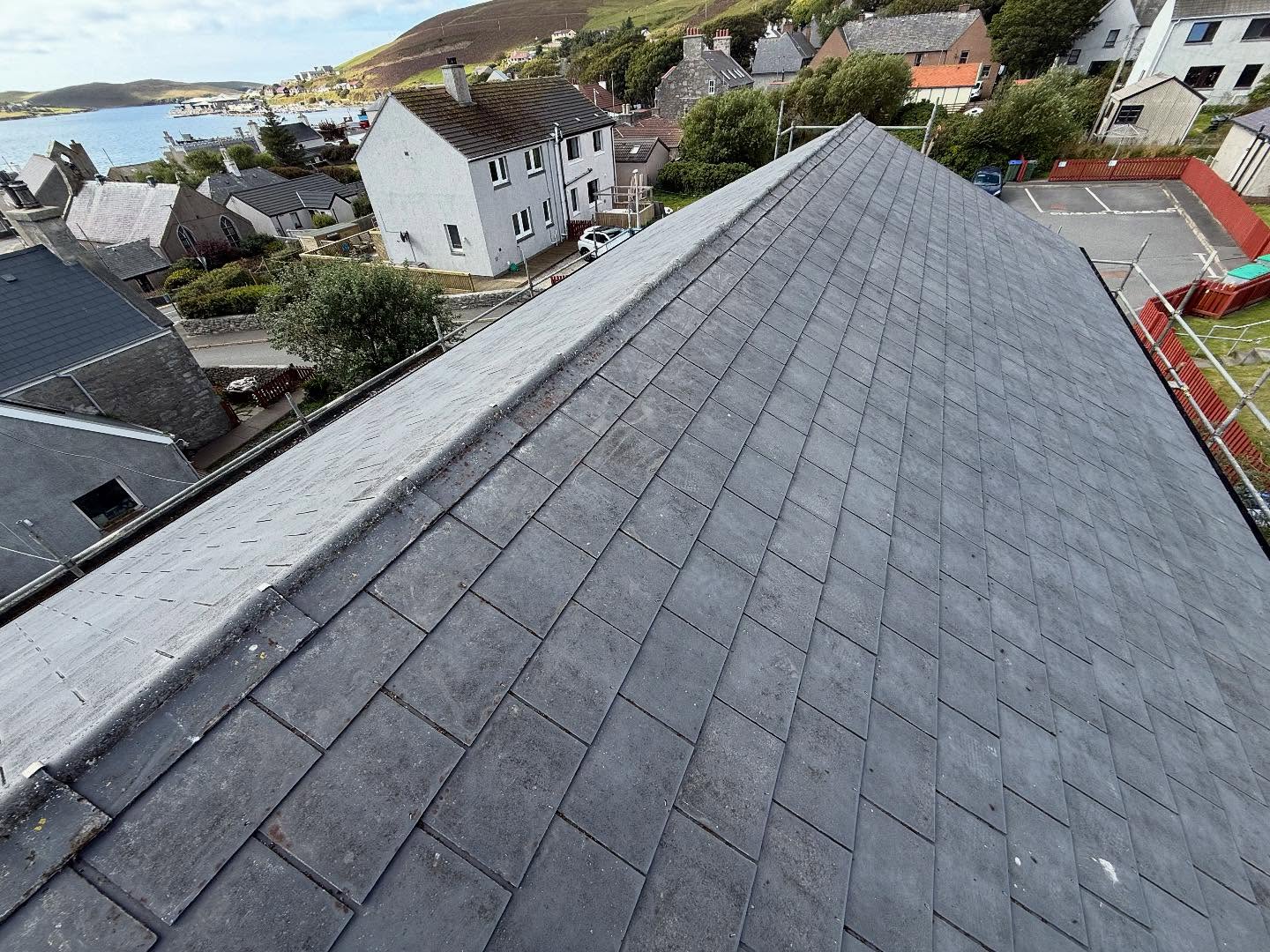 BeforeAfter
Before & After
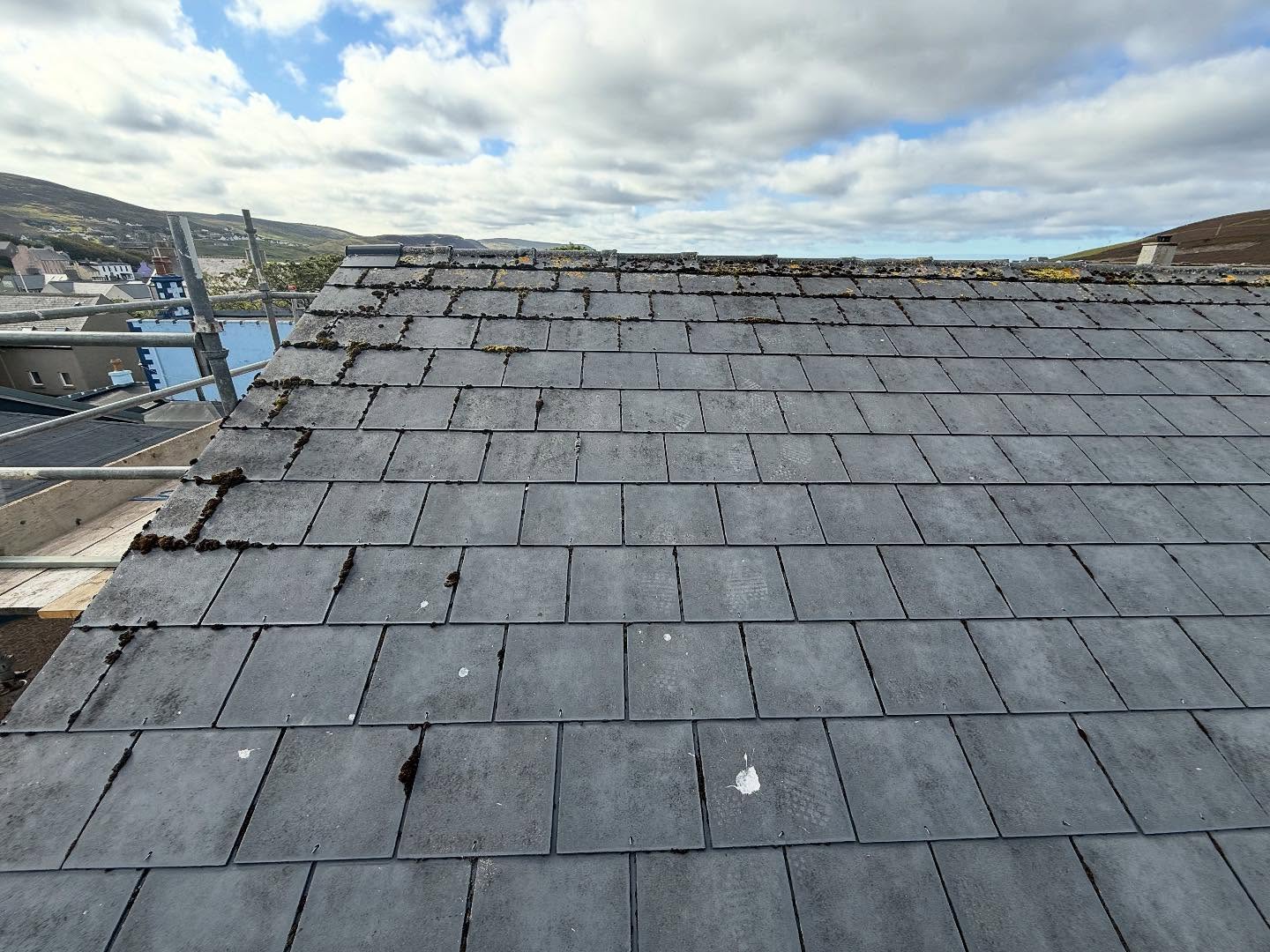
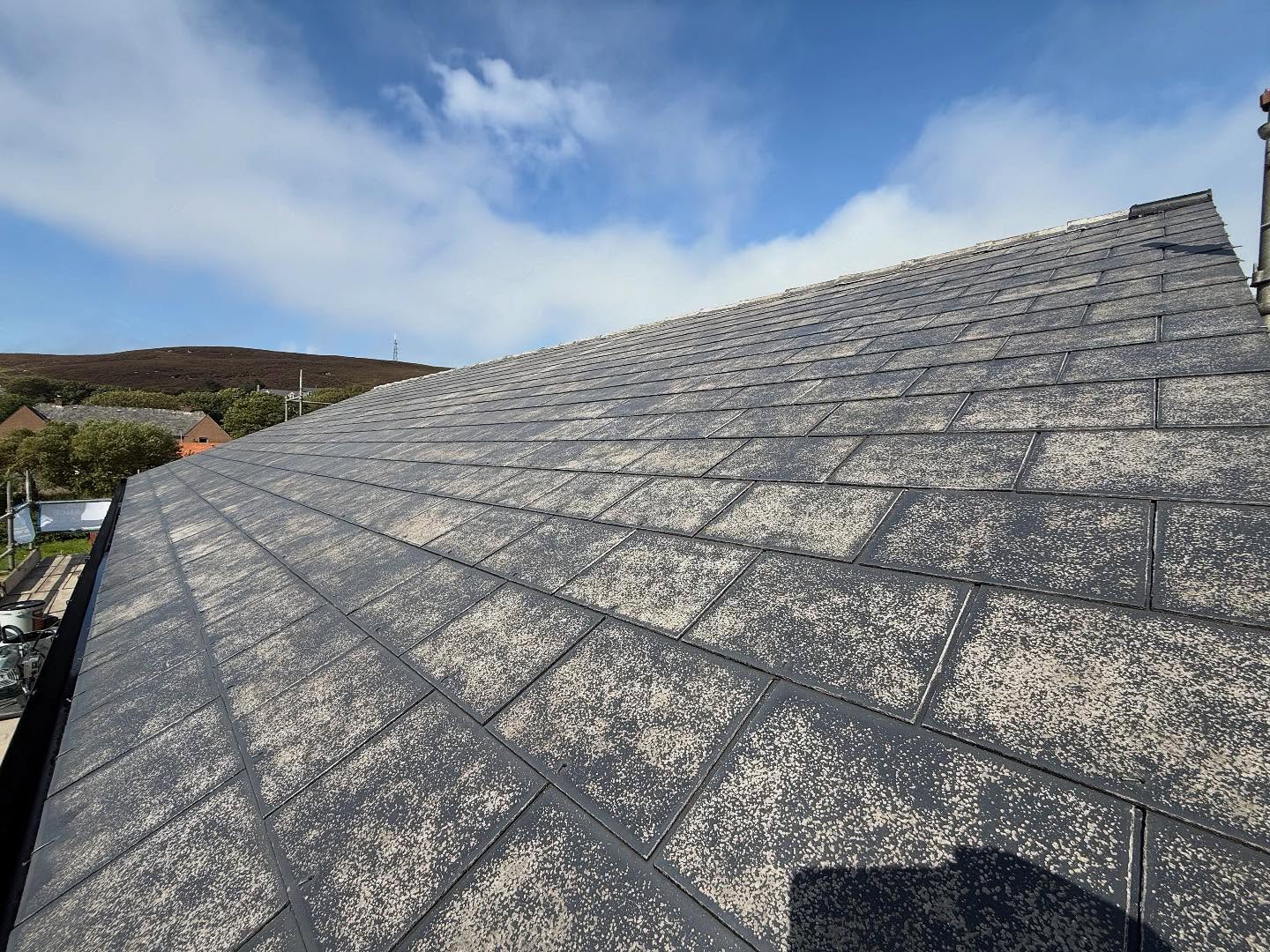
Drag the handle to compare. Both photographs are from one of our own roof cleaning jobs in Shetland.
Our Work
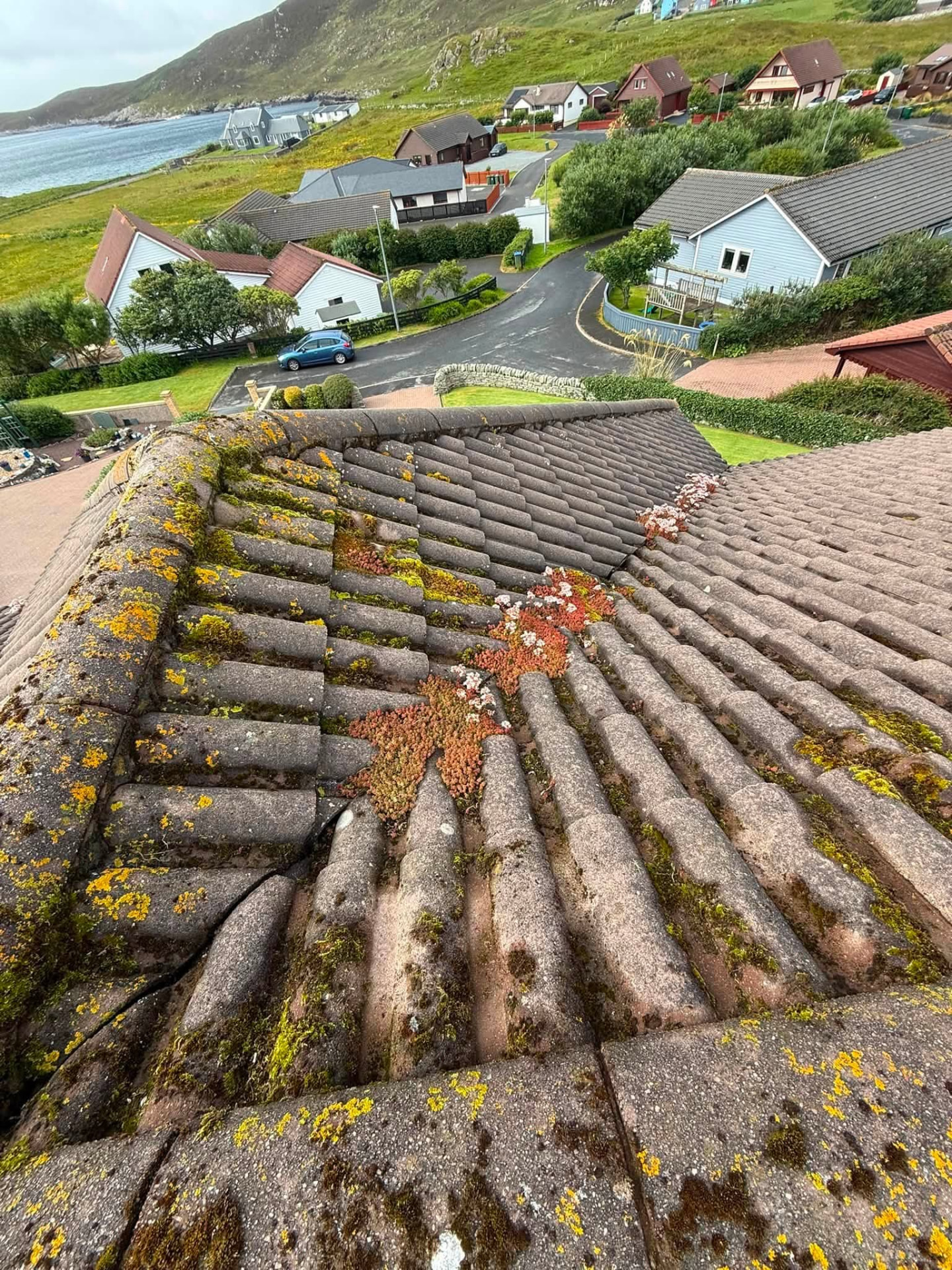
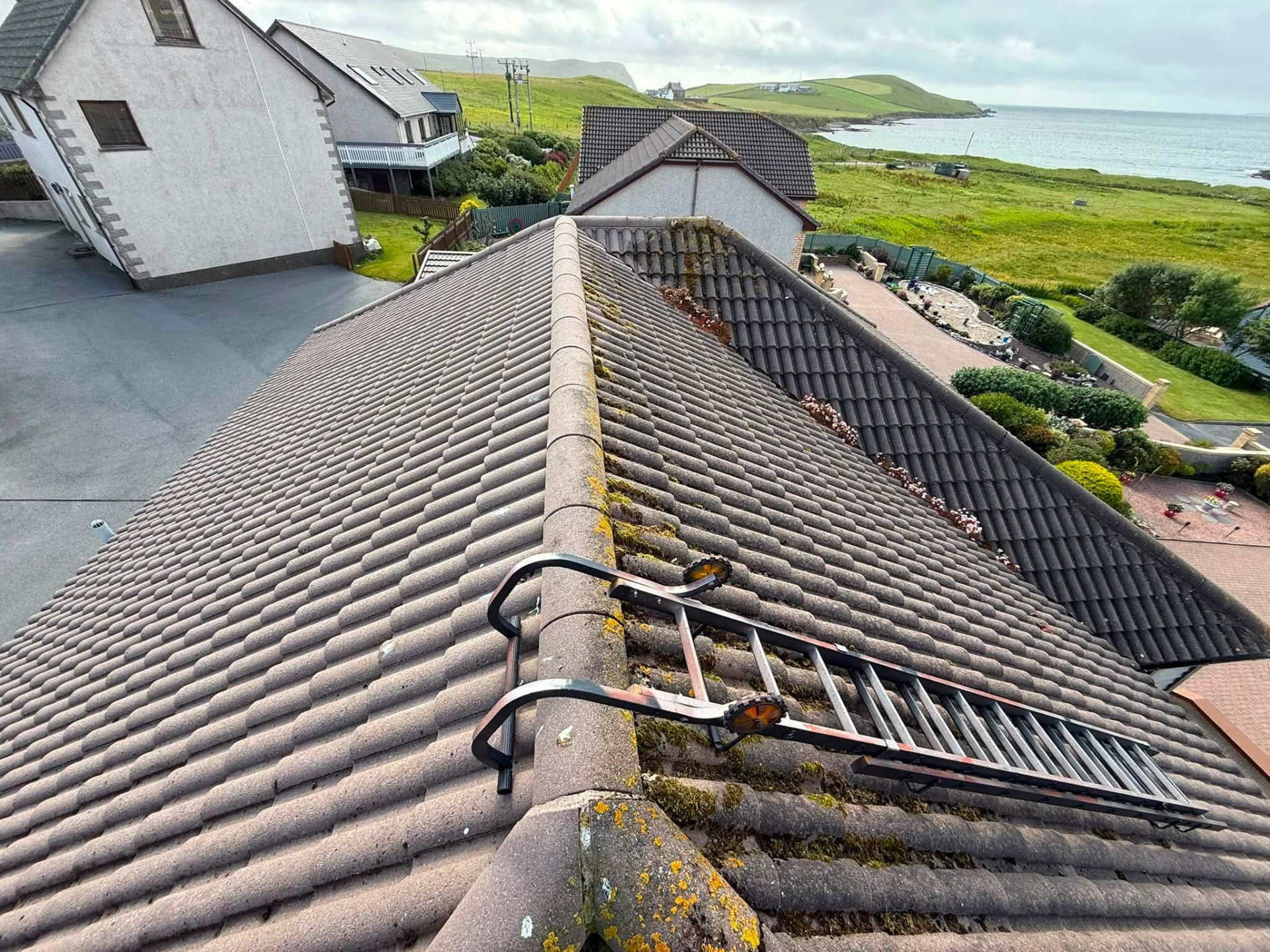
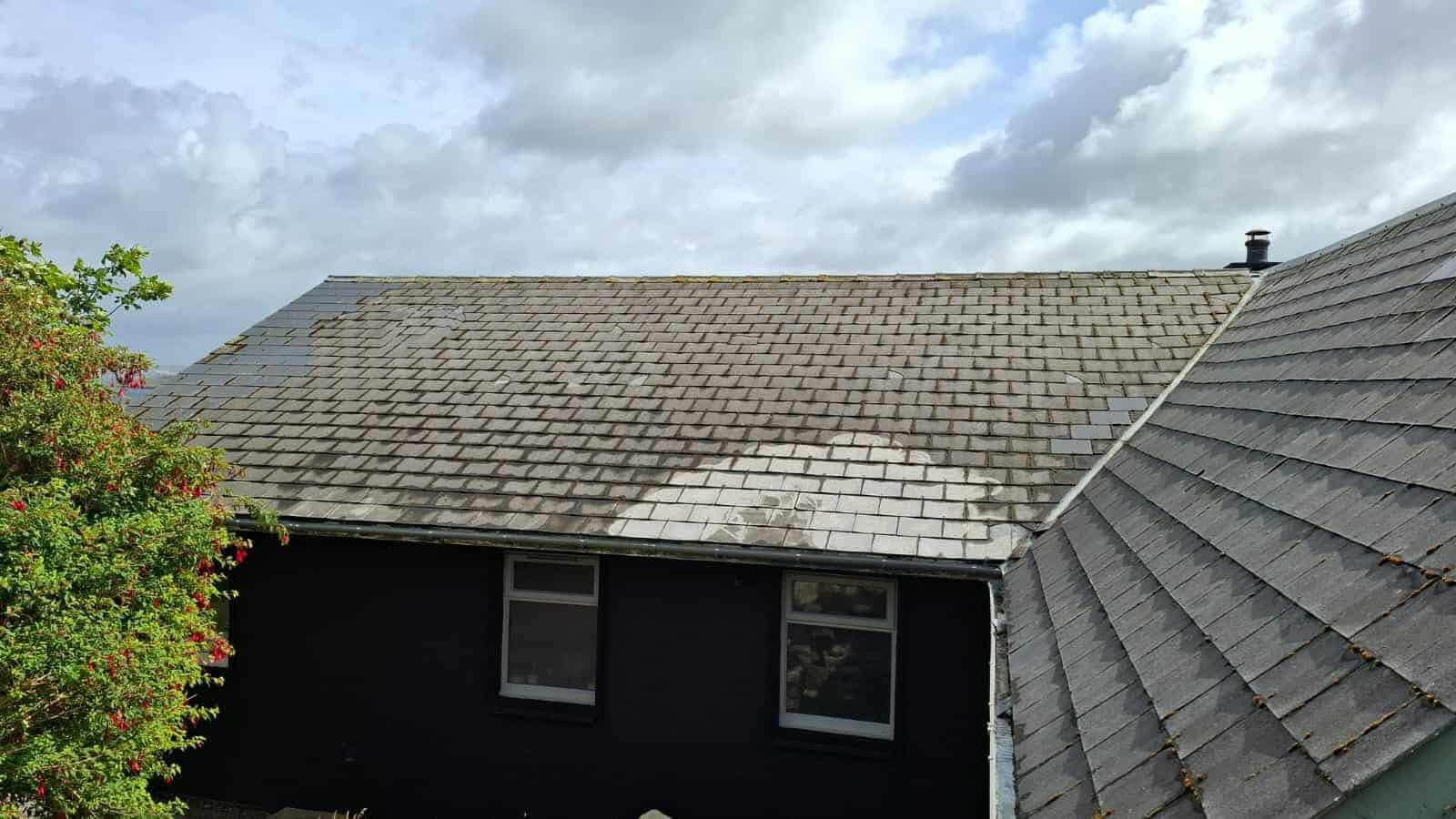
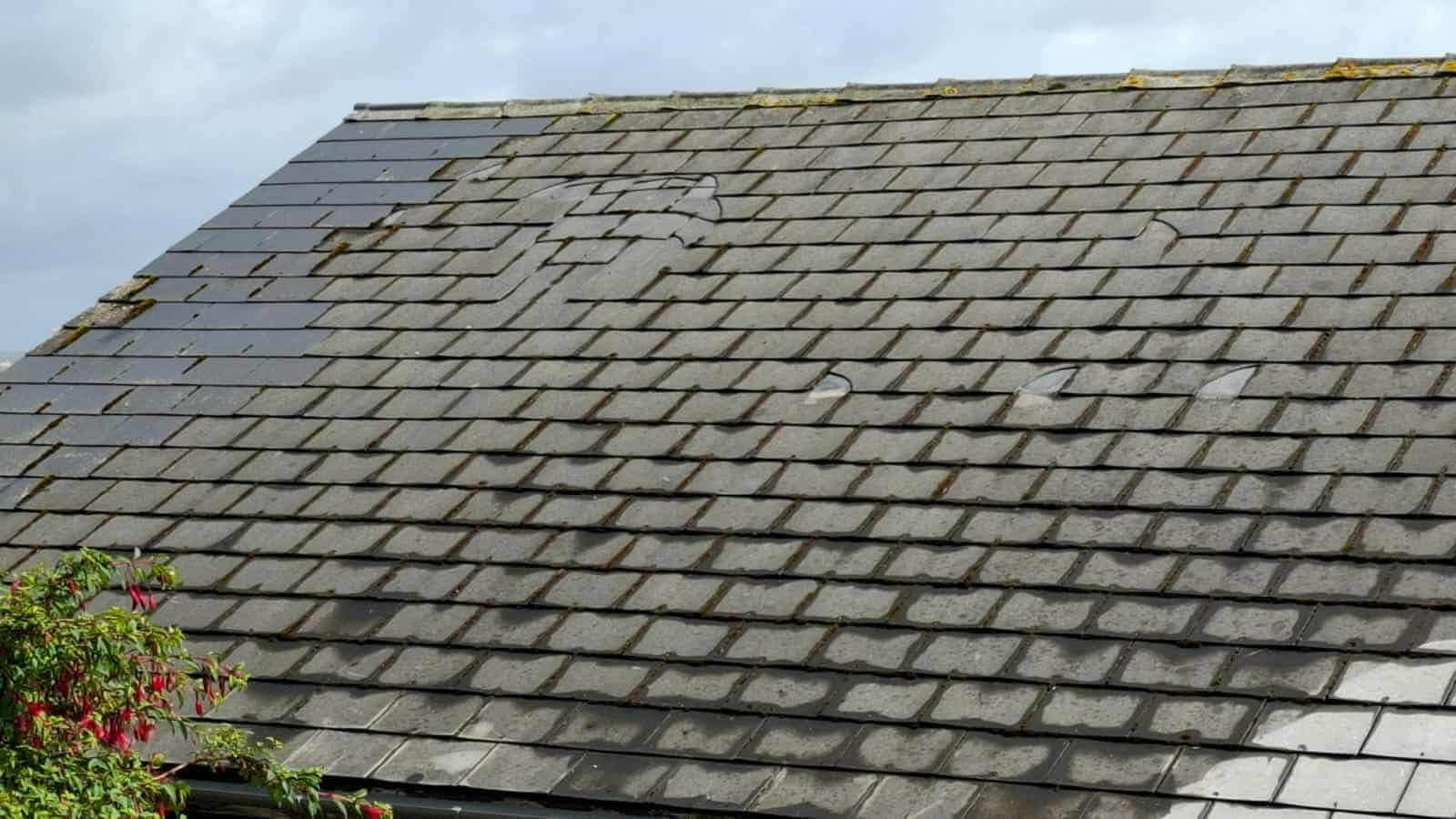
Photographs from our own jobs on Shetland properties, no stock images.
Where We Work
We are based on Commercial Street in Lerwick and travel across both island groups for cleaning and maintenance work.
More detail on the areas we cover is on the homepage areas section.
Questions
It depends on the size and pitch of the roof, the covering, how much growth there is and how we can get access to it. We do not quote blind; we look at the roof and give you a clear price for the work before anything starts. The estimate is free and there is no obligation.
Most domestic roofs are a one to two day job. A larger property, a difficult access situation or a roof carrying very heavy growth can run longer, and weather on the islands can move a date. We tell you the expected duration when we price the work.
Not with the method matched to the covering, which is the whole point of how we work. Damage comes from high-pressure water aimed at surface-sensitive coverings. We softwash or remove growth mechanically where that is the right approach for your roof.
In this climate you should expect growth to return in time: damp, mild island conditions favour it. A biocide treatment slows regrowth considerably, and keeping gutters clear helps. We will give you a realistic view for your particular roof rather than a number that sounds good.
Yes. Everything the clean brings off the roof ends up in the gutter line, so clearing gutters, hoppers and outlets is part of the job rather than an upsell.
Yes. We are based at 68 Commercial Street in Lerwick and work across the Shetland Islands and Orkney, including Scalloway, Brae, Sandwick, Whalsay, Kirkwall, Stromness and St Margaret's Hope.
We tell you, with a straight explanation of how urgent it is. Because the same team carries out roofing and maintenance work, we can usually repair it rather than sending you looking for another trade.
Some work can be done through the winter, but wind and driving rain limit safe access and affect how treatments perform. We plan the job around a sensible weather window rather than pushing on and doing it badly.
Our office hours are Monday to Friday, 9am to 5pm. Call 01595 747045 and tell us what has happened: if it is storm damage or water getting into the building we will tell you honestly how quickly we can be there.
Always. A coating applied over moss, lichen or loose grime will not bond properly and will fail early. Cleaning is the first stage of any roof coating job we do.
Related Work
Free Estimate
Tell us the property type and what the roof looks like. We will come and assess it, explain the method we would use, and give you a firm price: free, with no obligation to go ahead.
property@arthurandsimpson.com
68 Commercial Street, Lerwick, Shetland ZE2 9EZ
Mon–Fri, 9am–5pm · Closed Sat & Sun
17 years' property experience · Lerwick-based team · Free, no-obligation estimates